… those who say that they would have right without its correlate, wrong, or good government without its correlate, misrule, do not apprehend the great principles of the universe, or the nature of all creation. One might as well talk of the existence of Heaven without that of Earth, or of the negative principle without the positive, which is clearly impossible. Yet people keep on discussing it without stop; such people must be either fools or knaves. (Chuang-Tza, 17)
Yinyang is a fundamental concept in early Taoism. It is often expressed as ‘yin-yang’ or ‘yin and yang’. But ‘yinyang’ is a whole, and it is misleading to see ‘yin’ and ‘yang’ as components.
In my opinion, the concept of Yinyang is the key to understanding the Tao, and all of reality.
I became interested in this when researching my doctoral thesis, which was about dipolarity… the coincidence of opposites.[1] With dipolarity, the two opposite poles, like with a magnet, complement, or complete one another, and cannot exist without the other.
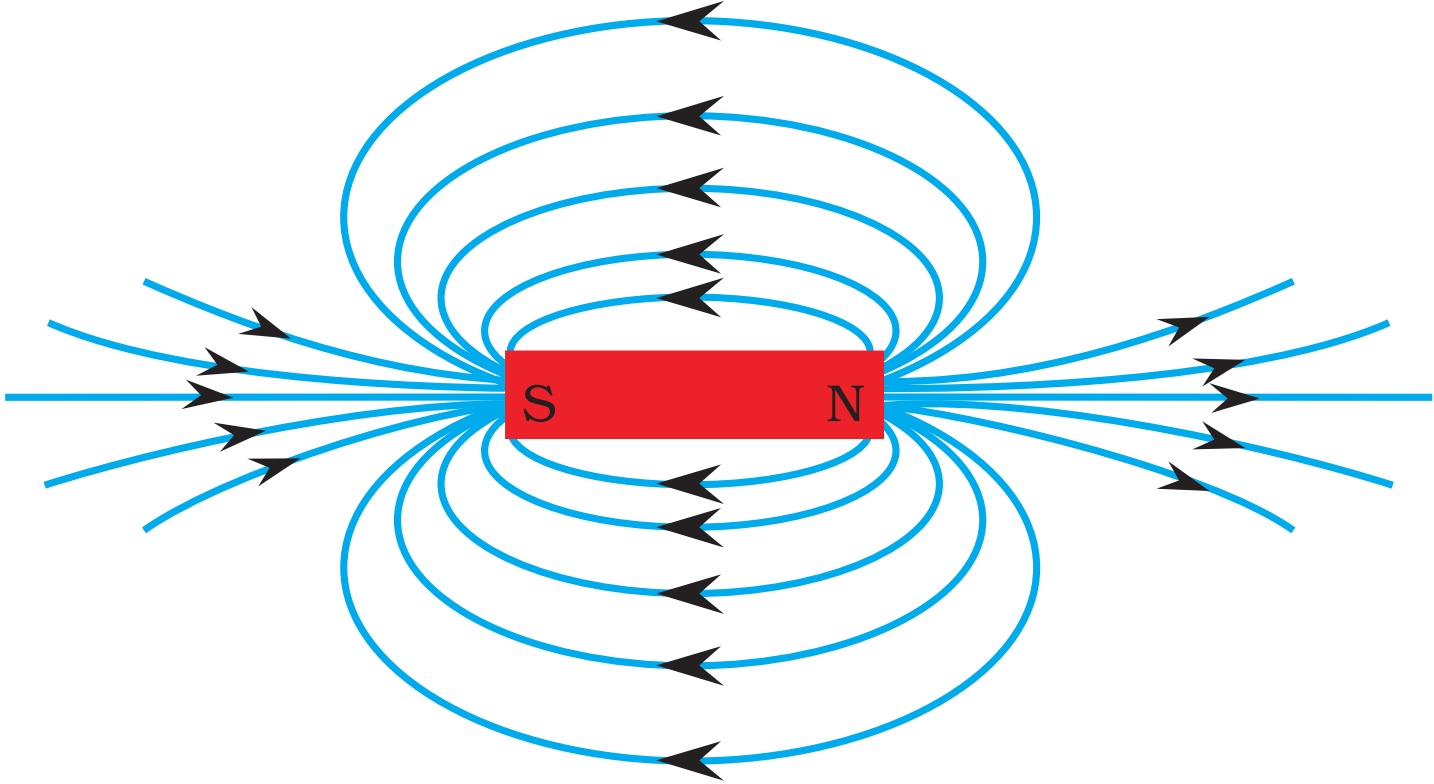
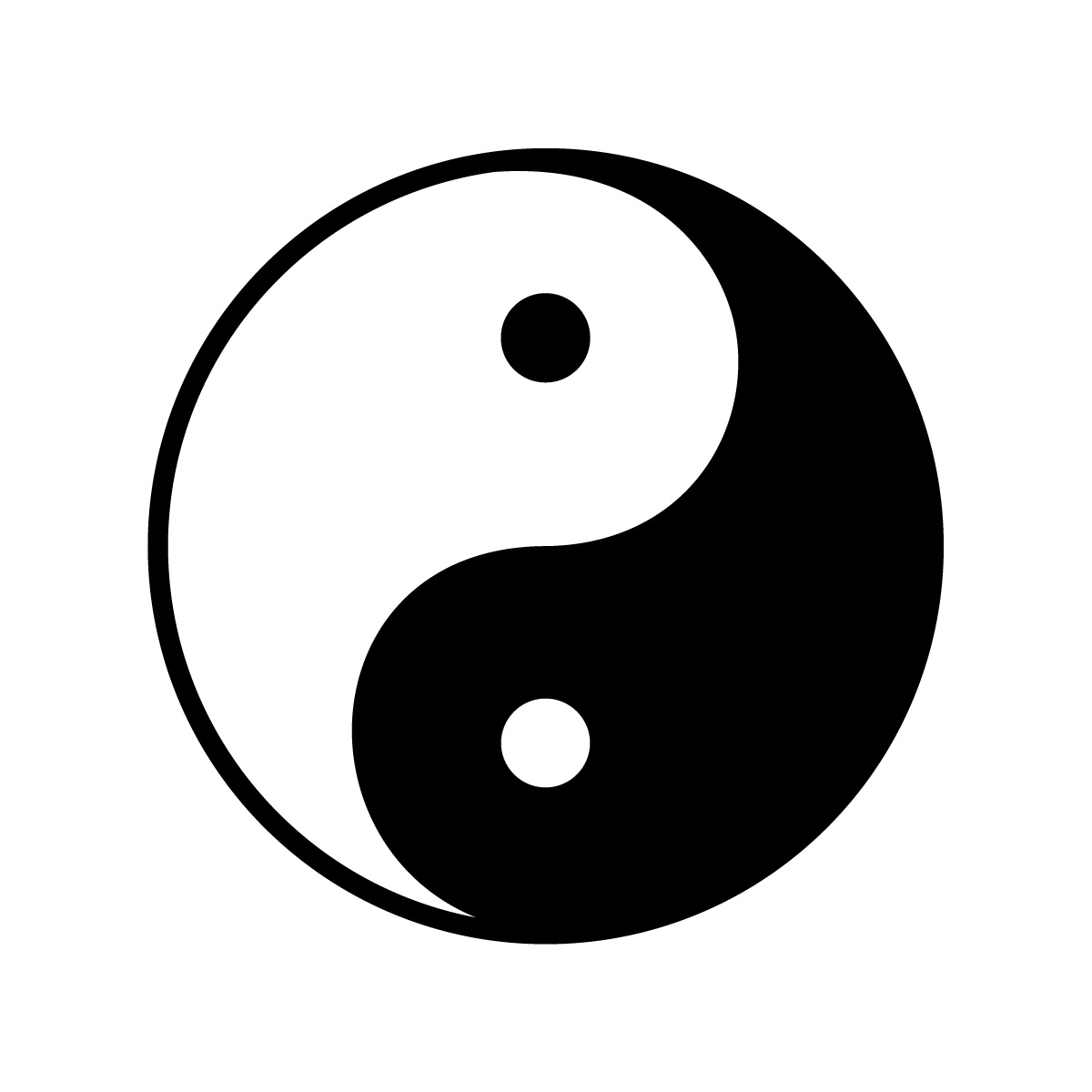
| Yin (Black) Dark / Night Negative Feminine Death Non-being / Emptiness / Space Chaos | Yang (White) Light / Day Positive Masculine Life Being / Form Order |
Western philosophy has almost totally failed to recognise dipolarity in its quest for unity and unifying principles, and in its enslavement to dualism (religion in particular). The main exception is Heraclitus of Ephesus (c.544-484 B.C.), who lived at about the same time as the early Taoists. Here are a few fragments from Heraclitus’ writings which are like what we read in the Tao Te Ching:
- The way up and down is one and the same.
- Things taken together are wholes and not wholes, what is in agreement differs, what is in tune is out of tune, and from all things one thing and from one thing all things.
The definitive work on Yin-Yang, or Yinyang, in Chinese writings is by Professor Robin R. Wang.[2] In the introduction to her book she describes six aspects or forms of yinyang:
1) Maodun 矛盾 : Contradiction and opposition. Although yinyang thought may prompt us to think of harmony, interconnection, and wholeness, the basis of any yinyang distinction is difference, opposition, and contradiction. Any two sides are connected and related, but they are also opposed in some way, like light and dark, male and female, forceful and yielding. It is the tension and difference between the two sides that allows for the dynamic energy that comes through their interactions.
2) Xiangyi 相依 : Interdependence. One side of the opposition cannot exist without the other. This interdependence can be seen on several different levels. On one level, it points out the interdependence of opposites as relative concepts. In labeling something as “high,” one must implicitly label something else as “low.” One cannot have a concept of “good” without there existing a concept of “bad” (Daodejing, chapter 2).
3) Huhan 互 含 : Mutual inclusion. Interdependence is linked closely to mutual inclusion. If yin depends on yang, then yang is always implicated in yin; in other words, yin cannot be adequately characterized without also taking account of yang. The same is true of yang – it necessarily involves yin. This mutual inclusion is best captured in the famous yinyang … which includes a small circle of yang within the fullest yin and a small circle of yin within the fullest yang.
4) Jiaogan 交感 : Interaction or resonance. Each element influences and shapes the other. If yin and yang are interdependent and mutually inclusive, then a change in one will necessarily produce a change in the other… This mutual resonance is crucial to yinyang as a strategy because it entails that one can influence any element by addressing its opposite, which in practice most often takes the form of responding to yang through yin.
5) Hubu 互補 : Complementarity or mutual support. Each side supplies what the other lacks. Given that yin and yang are different but interdependent, properly dealing with a situation often requires supplementing one with the other, which is a way of achieving the appropriate balance between the two.
6) Zhuanhua 轉化 : Change and transformation. One side becomes the other in an endless cycle. Yinyang thought is fundamentally dynamic and centers on change. In nature, there is decline, deficiency, decrease, and demise, as well as flourishing, surplus, increase, and reproduction. In the human world, life is filled with trouble, failure, exhaustion, and insufficiency, as well as fullness, fruition, mastery, and success. Considering these various states of being, one can derive that change is perpetual, never ending.
This concept of Yinyang is nicely described in the following:
- Alan Watts: “At the very roots of Chinese thinking and feeling there lies the principle of polarity, which is not to be confused with the ideas of opposition or conflict. In the metaphors of other cultures, light is at war with darkness, life with death, good with evil, and the positive with the negative, and thus an idealism to cultivate the former and be rid of the latter flourishes throughout much of the world. To the traditional way of Chinese thinking, this is as incomprehensible as an electric current without both positive and negative poles, for polarity is the principle that + and – , north and south, are different aspects of one and the same system, and that the disappearance of either one of them would be the disappearance of the system.” (from Tao: The Watercourse Way, chapter 2) A light shines in the darkness. “Come to think of it, what else can it shine in.”
- Andrew Beaulac: “The person of Dao tends to be more at ease with existence because of a recognition that so-called opposites are secretly in harmony with each other. With this understanding, one no longer strives to make one side win, nor does one live in anxiety about its opposite side. The wise person has discovered that the interplay of “opposing” forces is necessary to the functioning of the universe. Wanting all growth or light with no decay or dark is simply an absurdity of human thinking. The Dao is always in harmony, and, living attuned to it, one never performs any action amiss.” – Andrew Beaulac, Sitting with Lao-Tzu: Discovering the Power of the Timeless, the Silent, and the Invisible in a Clamorous Modern World (Apocryphile Press, 2007)
More from Alan Watts:
“The key to the relationship between yang and yin is called hsiang sheng, mutual arising or inseparability.”
“To be and not to be mutually arise. Yes and no, light and dark, long and short etc., mutually arise. This interdependence and mutual arising is the Tao.”
“We do not easily grasp the point that the void is creative, and that being comes from nonbeing as sound from silence.”
“Thus, the yin-yang principle is that the somethings and the nothings, the ons and the offs, the solids and the spaces, as well as the wakings and the sleepings and the alternations of existing and not existing, are mutually necessary. How, one might ask, would you know that you are alive unless you had once been dead? How can one speak of reality or is-ness except in the context of the polar apprehension of void?”
“To be or not to be is not the question — because you can’t have one without the other! Not-being implies being; just as being implies not-being.” (from Alan Watts, What is Zen?)
Everything is both subjective and objective at the same time.
Everything has both an ‘inside’ and an ‘outside’ (metaphorically).
Waves are ‘Ons’ and ‘Offs’ at the same time(Alan Watts)
Alan Watts, What is Zen? (edited by Mark Watts & Marc Allen, 2000)…
“… it is totally obvious that there is just one energy, and that consciousness and unconsciousness, being and not-being, life and death are its polarities. It is always undulating in this way: Now you see it, now you don’t — now it’s here, now it isn’t. Because that “on” and “off” is the energy, and we wouldn’t know what the energy was unless it was vibrating. The only way to vibrate is to go “on” and “off,” and so we have life and death, and that’s the way it is from our perspective.”
The following is from Alan Watts, The Two Hands of God: The Myths of Polarity, (New World Library, 2020, originally published in 1963).
“The familiar Chinese symbol of the primordial pair is the circle composed of what seem to be two stylized fishes, one black and one white, each with an “eye” of the opposite color. The design obviously suggests rotation, and in this respect is cognate to the swastika and the triskelion and perhaps also to the zodiacal sign of Pisces, of the ending-beginning of the year. The symbol is known as the tai-chi (Supreme Ultimate) or simply as the yin-yang, though the Supreme Ultimate is often designated by an empty circle. The significance of the circle, of the rotary character of the yin-yang symbol, is of course that the world is not seen as created, as having a temporal beginning or end.” (page 61)
“Fundamental to the yang-yin symbolism is the sense of the world as a system of transformation, and this is really the importance of the passage just quoted. Yin and yang are respectively like the troughs and peaks of a wave system. The S curve dividing the yin-yang circle suggests a kind of whiplash or peristaltic motion, a continuous undulation not only of life and death, day and night, but of one living form into another.” (page 67)
“In many respects the yin-yang symbolism is more of a philosophy or even a primitive science than a mythology. Though called male and female they are never personified as god and goddess progenitors of the world, nor is there the slightest hint of their being engaged in a cosmic war of light against darkness or good against evil. The Chinese never seem to have taken the personification of cosmic forces very seriously, nor to have had any strong inclination to consider the universe as the creation and dominion of a heavenly ruler. Yin-yang imagery inclined them, on the whole, to consider the universe as a self-organizing body which moves and regulates itself spontaneously, like the circulation of the blood or the legs of a centipede.” (page 69)
Antony Cummins, The Ultimate Guide to Yin Yang: An Illustrated Exploration of the Chinese Concept of Opposites (Watkins, 2021). This very well illustrated book is based mostly on the I Ching (The Book of Changes).
Einzelgänger, ‘The Deep Meaning of Yin & Yang’ https://youtu.be/6gIMVxFen_A
Alan Watts, ‘The Yin Yang Philosophy’ https://youtu.be/tLPLJFoz0Lw
Alan Watts, ‘The Basic Secret of Yin and Yang’ https://youtu.be/GSlWJTXgCwE
[1] Mark D. Brimblecombe, Dipolarity and God (The University of Auckland, 2000).
[2] Robin R. Wang, Yingang: The Way of Heaven and Earth in Chinese Thought and Culture (Cambridge University Press, 2012).